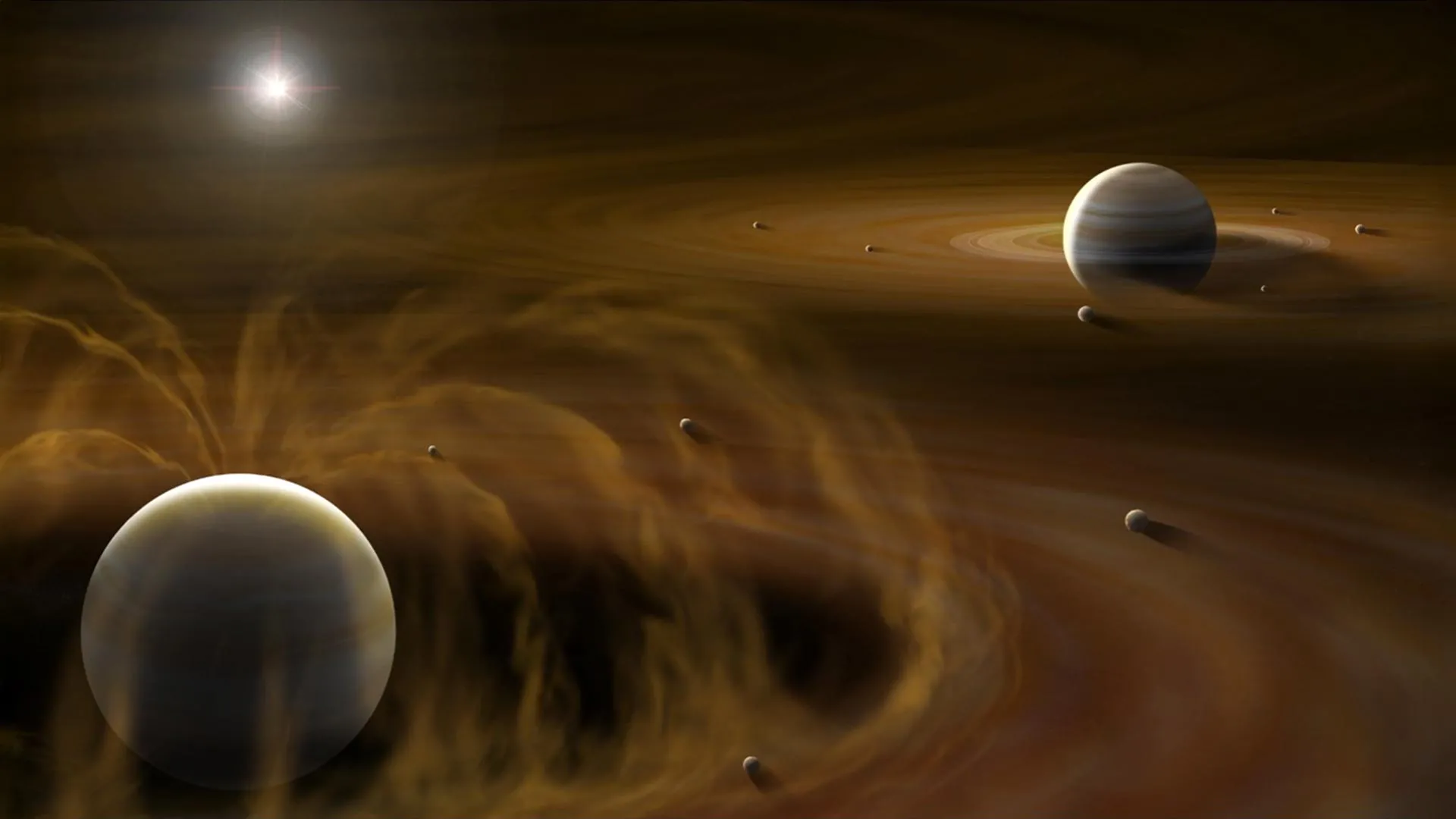
New research has unveiled a fascinating theory about the origins of Saturn's stunning rings and its largest moon, Titan. Scientists propose that these celestial features may have been shaped by a series of dramatic collisions involving Saturn's moons. This hypothesis suggests that a once-lost moon could have played a crucial role in this cosmic ballet, leading to the formation of Saturn's iconic rings and the birth of Titan.
The study, conducted by a team of astrophysicists, employed advanced computer simulations to reconstruct the chaotic environment around Saturn billions of years ago. The simulations indicate that gravitational interactions and collisions between moons could have resulted in the disintegration of one or more moons. The remnants from these catastrophic events likely contributed to the material that eventually formed Saturn's rings, while also influencing the creation and development of Titan.
This theory not only offers insight into Saturn's current appearance but also enhances our understanding of planetary formation processes in the outer solar system. By piecing together the history of Saturn's moons and rings, researchers hope to gain a clearer picture of the dynamic and often violent nature of celestial evolution. As scientists continue to explore these cosmic phenomena, the story of Saturn and its enigmatic features remains an intriguing subject of study.
— Authored by Next24 Live








 English (US)