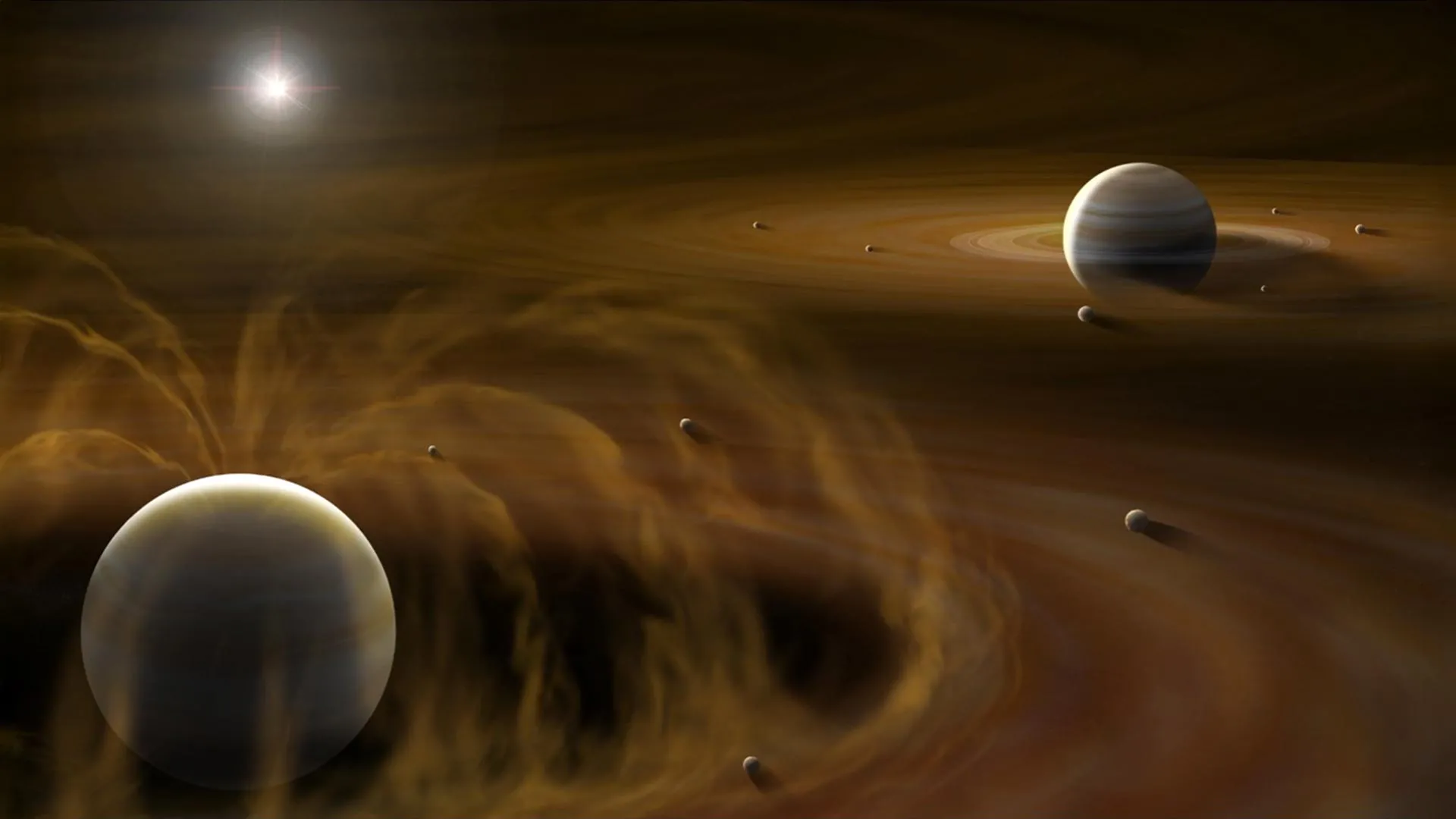
An international team of scientists has uncovered compelling evidence suggesting that Jupiter’s icy moons may have been seeded with the essential chemical ingredients for life right from their inception. This groundbreaking research delves into the complex chemical compositions found on these moons, hinting that the building blocks of life could have been present during their formation. The study, drawing on advanced astronomical observations and simulations, provides a fresh perspective on the potential for life beyond Earth.
The research highlights how these moons, including Europa and Ganymede, might have captured crucial organic molecules as they formed. These molecules, potentially originating from the primordial gas and dust surrounding Jupiter, could create environments conducive to life. The findings open up exciting possibilities for future exploratory missions, which could delve deeper into these moons' surfaces and subsurfaces to search for further signs of habitability.
As scientists continue to unravel the mysteries of our solar system, this discovery underscores the importance of Jupiter’s moons in the broader quest to understand life's origins. It challenges previous assumptions and encourages a renewed focus on these celestial bodies as prime candidates in the search for extraterrestrial life. With upcoming missions planned by space agencies, the potential to uncover more about these moons' life-supporting capabilities looks promising.
— Authored by Next24 Live









 English (US)